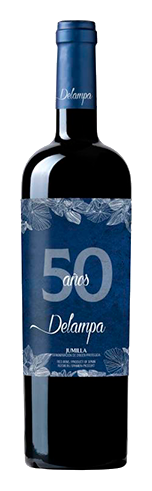

The Monastrell grape is a type of grape very common in the crops of the Spanish Levante. It has the particularity of possessing a thick skin, which helps it to withstand the blows caused by the rain; this offers the advantage that the berries do not come to harm.
This class of grape grows in temperate or warm areas and its process of ripening is late. This is due to the great quantity of sugars that it contains and to its small size. It has a great advantage: it adapts to different soils, and for this reason it is cultivated in various parts of the world; although it is true that, in warm areas such as the Levante of Spain, the conditions for its growth are perfect.
When it should be planted
Some growers proceed to plant the Monastrell grape in autumn or spring. In the season of spring, the soil is moist and saturated with useful components, and at that moment the roots of the seedling begin to appear. One of the disadvantages of sowing in the season of spring is that the seedling may be affected by pests or by very cold climates belatedly. Even so, it is common for this variety to be sown at this time of year, since it also has many other advantages.
Sowing in the season of autumn, however, must be carried out in advance so that the plant has sufficient margin of time for the roots to appear. When winter arrives, it must be protected in a secure manner so that it does not suffer from freezing.
Preparation of the materials and areas of planting
The preparation of the soil for sowing begins with making holes and trenches, in order afterwards to place the seeds. Now, to carry out the sowing in the season of spring, one must prepare in the season of autumn, and to carry out the sowing in autumn, one must prepare in summer (for about a month and a half).
The cuttings must be soaked with water, so as to stimulate growth. Once soaked, one proceeds to sowing, leaving the buds in the upper area. They must be covered with plastic vessels, creating their own climate. After the hibernated cuttings have developed sufficient roots and leaves, they may already be moved to a permanent site.
1. The soil
To plant the seedling in a permanent area, it must be placed in a hole together with a little earth, so that the neck of the plant remains at soil level. It is recommended to water the grapes abundantly. They must be covered so that they do not receive sunlight in a direct manner, and the earth around the plant must be covered.
2. The care of the grape
The Monastrell grape may develop in an independent manner, but care must be taken. If it is done correctly, the yield and the quality of the grapes increase. The different activities recommended for its care depend on the stage in which the Monastrell finds itself.
3. Irrigation
Monastrell grapes are highly tolerant of drought and heat. Their irrigation may be carried out whenever it is necessary; that said, one must remain attentive to the behaviour of atmospheric precipitation.
It is recommended not to water them during their stage of flowering, stopping it approximately two weeks before the grapes are ripe.
4. Fertiliser for the soil
The first fertiliser is applied beneath the grape at the instant of sowing. Liquid fertilisers, so that their absorption is much better in the season of autumn.
- Two weeks before the process of flowering, potassium salt, urea and superphosphate must be added.
- In the development of the grapes, superphosphate and potassium salt must be added.
- At the time of ripening of the grapes, phosphorus fertilisers are placed.
- And lastly, in the process of harvest, mineral fertilisers and nitrogen must be used as organic matter.
At Delampa, we have the finest of the Monastrell grape, a paradise for the senses. Discover it with our wine ÉXODO LAGRIMA MONASTRELL.